Resources
How to run a ward round without a clipboard
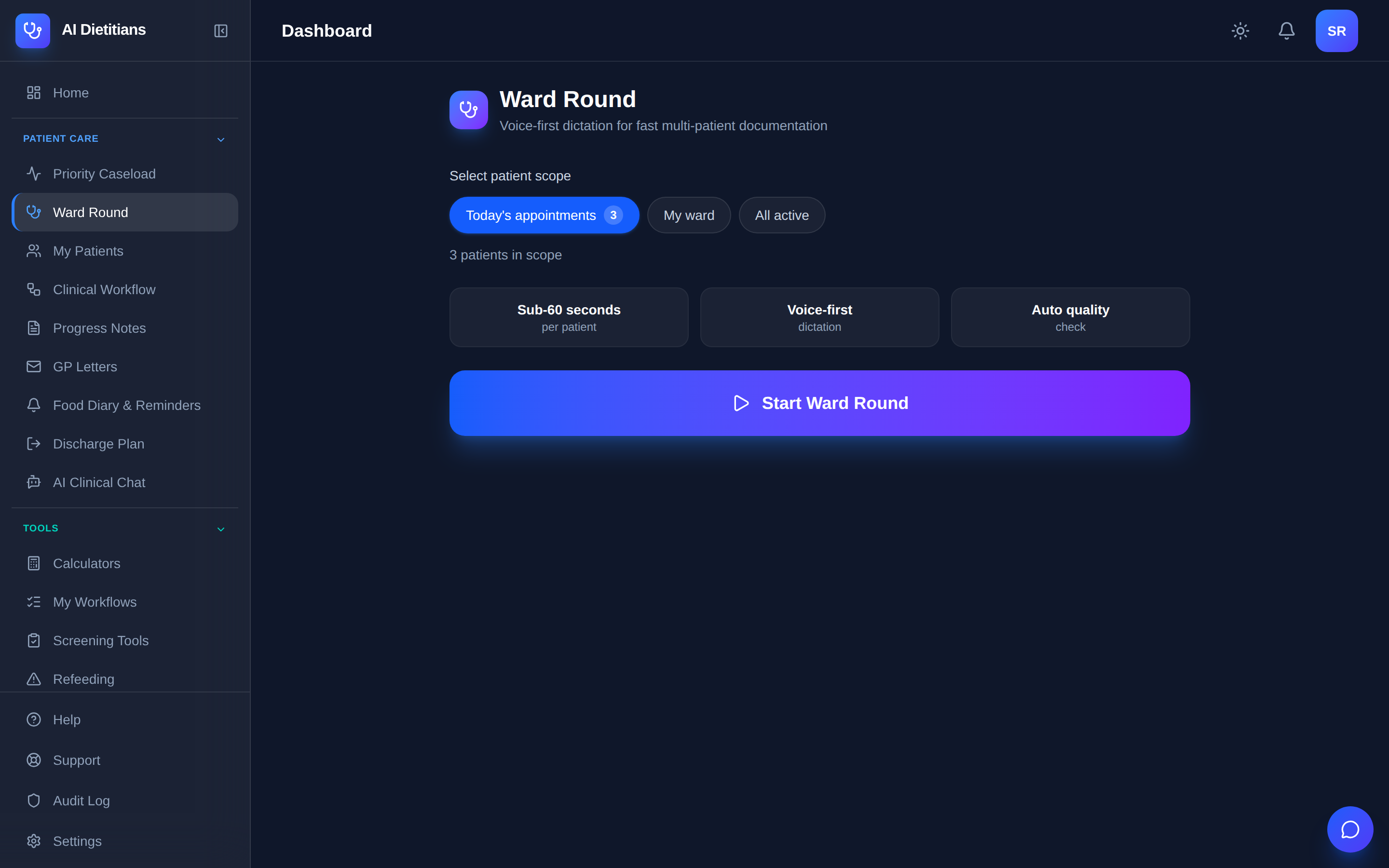
The problem with a ward round is not the round. It is that eight consults get written up at four o’clock from memory and a clipboard, and by patient six the detail is gone.
1. Build the list by ward, not by memory
Patients carry a ward and bed, so the round list is filtered to where you are actually walking. The list is the round, rather than a piece of paper that describes it.
2. Let the triage be visible
Priority caseload surfaces who needs you today rather than who you saw least recently — screening results, time since last review, and clinical flags. On a ward where you cannot see everyone, the decision about who to skip is a clinical decision, and it should be made from data rather than from the order of the beds.
3. Capture at the bedside
Add the note as you go. Dictate it if that is faster — each section has its own microphone, so the assessment is captured while you are still standing in front of the assessment.
The point is not speed for its own sake. A note written at the bedside contains things a note written at four o’clock does not: what the patient said, what the meal tray actually looked like, what the nurse mentioned in passing.
4. Let the calculators travel with you
Refeeding risk, energy and protein targets, enteral rate, malnutrition screening — in the same place as the list, so a question that occurs at bed 12 gets answered at bed 12.
5. Finish the round, not the paperwork
By the end of the round the notes exist. What is left is review and sign, not write.
A note on what this does not do
It does not decide who to see. It does not write the assessment for you. It removes the gap between doing the work and recording it, which is where the detail leaks out — and that gap is a documentation problem, not a clinical one.
References
- Dietitians Australia, Professional Practice Standards
- Australian Commission on Safety and Quality in Health Care, Comprehensive Care Standard — including screening and clinical documentation expectations.
- Ferguson M et al. (1999). Development of a valid and reliable malnutrition screening tool. Nutrition 15(6):458-464.
AI Dietitians supports clinical documentation and does not replace clinical judgement or your service’s protocols.