Resources
Dictate the note, sign the note
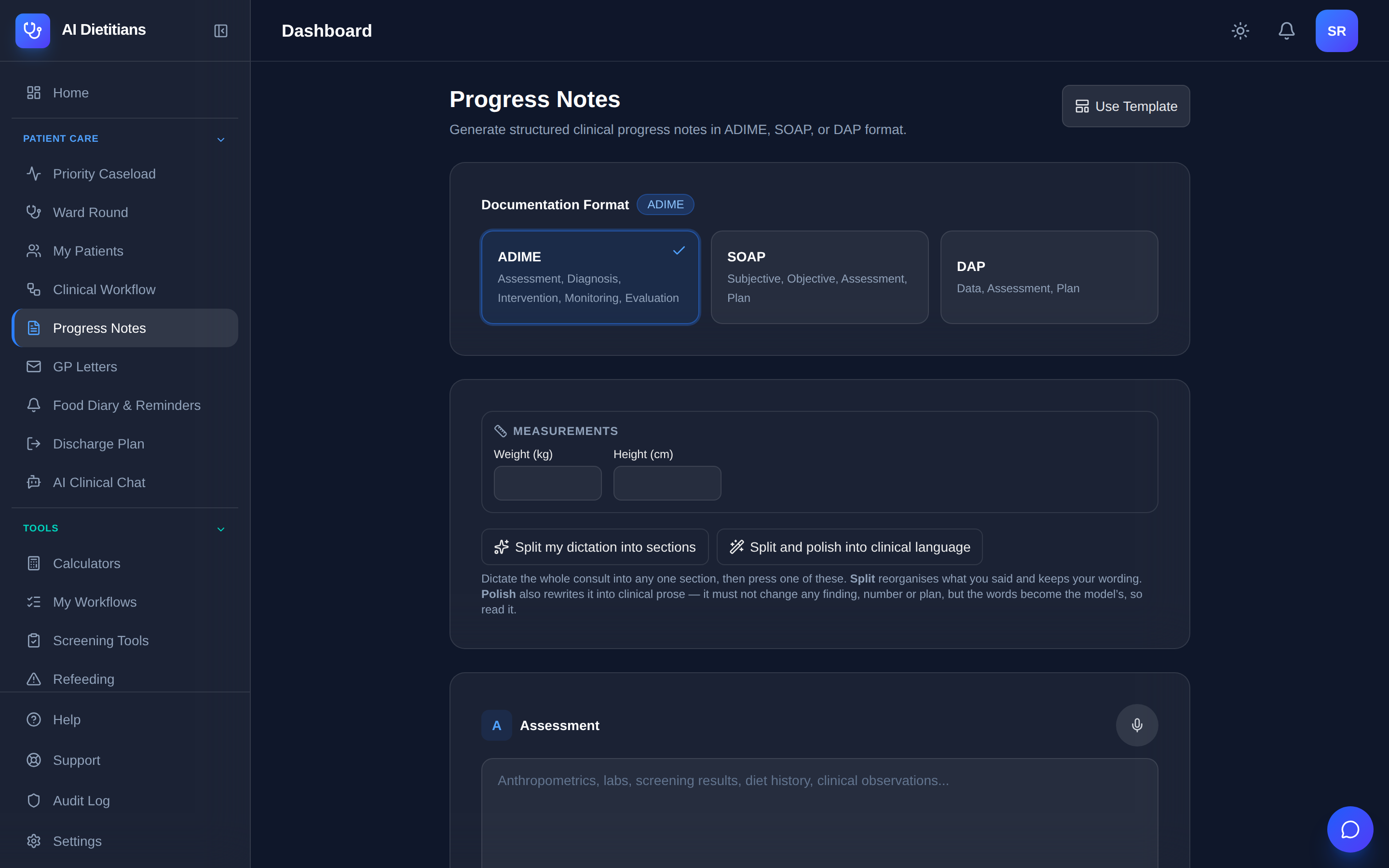
The note is the part of the day that happens after the day. Here is what the dictation path actually does, and — equally important — what it does not.
Pick your format, then talk
ADIME, SOAP or DAP. Each section has its own microphone, so you dictate the assessment, then the diagnosis, then the intervention — rather than producing one block of speech that has to be untangled afterwards.
Dictating per section matters more than it looks. A single long recording has to be split by a model guessing where the assessment ended, and it guesses wrong on exactly the consults that are complicated. Section-by-section, the structure comes from you.
What happens to the audio
Plainly, because it is the question that matters: the recording is sent to our AI provider to be transcribed, and that provider is in the United States. Audio cannot be de-identified before transcription, because until it is transcribed there is no text to de-identify.
Identifiers are then removed from the transcript that we store, and any further drafting is done from the redacted text.
If your service’s position is that patient audio may not leave Australia, dictation is the feature that rules out. You should know that before you trial it, not after — and the Essentials tier exists precisely for services in that position, with no AI features and no code path to a provider.
Then it is a draft
The structured note is a draft. You read it, change what is wrong, and sign it. Nothing reaches a chart, a GP or a patient until you do.
This is the honest limit of the technology in a clinical setting: it is very good at turning speech into the shape of a note, and it has no idea whether your clinical reasoning was right. The first part saves you the evening. The second part is your job and stays your job.
Speaking in another language
Dictation language is per-clinician. A dietitian who thinks in German can dictate in German, and the note comes back structured — which sounds niche until you meet a clinician who has been typing in their second language for years because the software assumed English.
References
- Our Privacy Policy sets out which providers process what, and where.
- Where your patient data actually goes — the longer answer to the residency question.
- Australian Privacy Principles, OAIC — the framework your obligations sit under.
AI Dietitians produces drafts to support clinical documentation. It is not a medical device and does not make clinical decisions. The treating clinician remains responsible for all clinical content.