Resources
How to give a patient a handout they can read
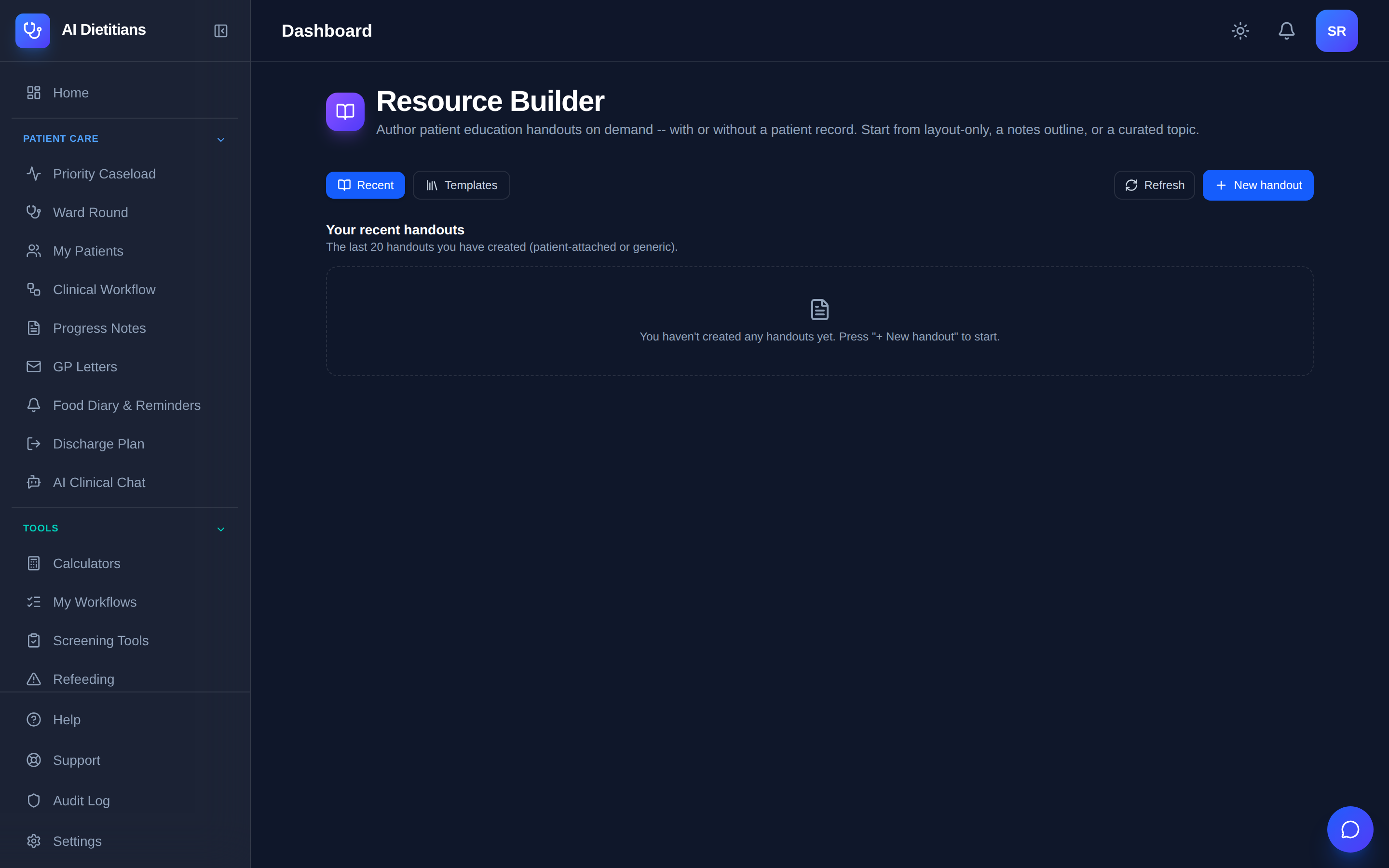
A generic PDF about healthy eating is not education, it is paper. This is how to produce a handout that matches the plan you actually agreed, in a language the patient reads.
1. Agree the plan first
The handout is generated from the plan in the record. If the plan says “soft, bite-sized textures and three high-protein snacks”, that is what the handout will say. Build it after the conversation, not before.
2. Set the reading level deliberately
The default is not always right. Australian health literacy guidance points at around a Year 8 reading level for general patient material, and lower where you have reason to think it is needed. This is a setting, and it is worth choosing rather than accepting.
3. Translate it — ten languages
Mandarin, Arabic, Vietnamese, Cantonese, Punjabi, Greek, Italian, Hindi, Spanish and Korean.
The reason this matters is not politeness. The person preparing the food at home is frequently not the person who came to the appointment. A texture-modified diet explained only to the patient, in English, is a plan that lives or dies on a car-park conversation.
4. Read it before you give it
Translated or not, the handout is a draft. Read it as the patient would. Two checks in particular:
Does it match what you said? Patients notice when the paper and the conversation disagree, and they believe the paper.
Is there a number on it that should not be? For someone recovering from an eating disorder, the weights, BMIs and calorie targets that make a clinical document useful are the content that can do harm in a document they keep and re-read. The platform scans patient-facing material for exactly this and flags what it finds rather than silently removing it — you are signing it, so you need to see everything in it.
5. Your branding, not ours
Once a practice logo is uploaded, handouts and letters carry it. Patients keep things that look like they came from their clinician.
References
- Australian Commission on Safety and Quality in Health Care, Health literacy
- NSW Health, Plain English and health literacy guidance
- IDDSI, Framework and descriptors — for texture terminology used in handouts.
Patient education material produced by AI Dietitians is a draft for clinician review. The treating clinician is responsible for what is given to a patient.